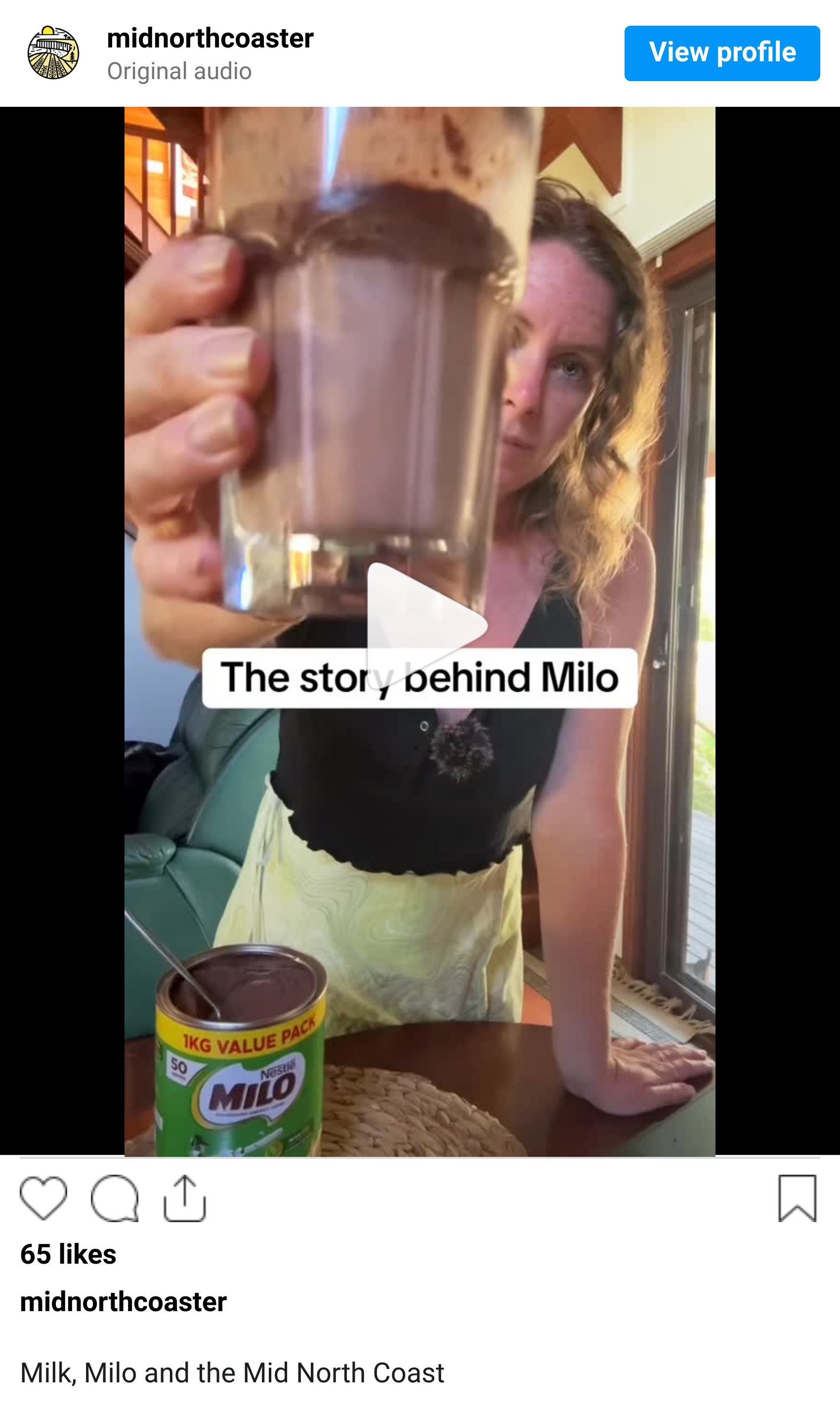
Milo – the iconic Australian choc-malt drink – was invented on the Mid North Coast and continues to be made at the Smithtown factory in Kempsey Shire.
How it started: During the 1929-39 Great Depression, Nestlé wanted to develop a “tonic drink” marketed to children, with the goal of providing nourishment that was often lacking at the dinner table. The drink needed to be made from locally available ingredients, taste good and not cost too much.
The task fell to Smithtown resident and trainee chemical engineer, Thomas Mayne, who spent four years developing Milo.
What happened: Mayne wanted to create a mix of vitamins and minerals that would dissolve when stirred, rather than fall to the bottom of the glass, Milo said. But when he walked into his kitchen one day to discover two of his children scooping the crunchy bits of what is now known as Milo off the top of their drinks, he realised that was its selling point.
Mayne unveiled Milo at the 1934 Royal Easter Show and production began in Smithtown that same year.
The drink was named after Milo of Croton, a 6th Century BC Greek wrestler said to possess great strength.
Milo is made with malted barley, milk powder, cocoa and added nutrients like calcium, iron, and B vitamins.

Milo coming off the production line. Imaged supplied Nestlé
Local factory: Milo is made at the Nestlé factory in Smithtown, a 24/7 operation that employs about 250 people. A Nestlé spokesperson says about 30 current staff have worked at the Smithtown factory for more than 20 years.
“Together, they produce around 11,000 tonnes of Milo every year,” the spokesperson said.
The Smithtown factory covers more than 10,000 square metres and produces a variety of Milo and other Nestlé products, including Nesquik.

Aerial site photo of the Nestle factory in Smithtown, where Milo is made. Image supplied Nestlé
Going global: Australia began exporting Milo in the 1950s. It is sold in 40 countries, including in Latin America, Africa and Southeast Asia, and made in 12 factories around the world including in Malaysia.
Nestlé says more than half (55 percent) of Milo’s ingredients are sourced in Australia, and the cocoa is certified by the Rainforest Alliance.