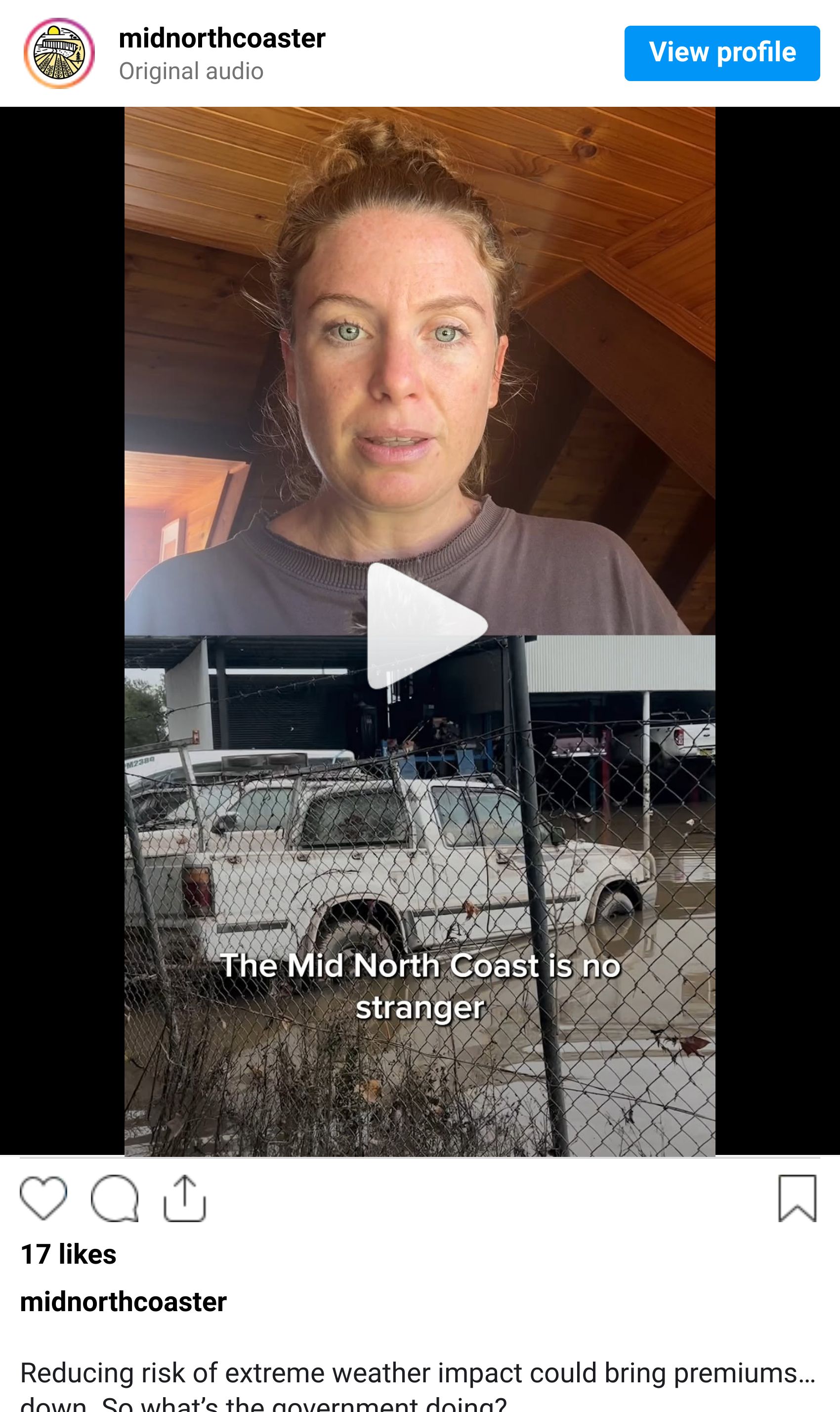
The Mid North Coast is no stranger to extreme weather events.
Just last year the region was hit with major floods and destructive storms leading to four “natural disaster declarations” from the NSW Government.
Nearly one year since the May floods, two local councils are out of pocket millions of dollars still waiting for disaster recovery reimbursement. The Government’s 25/26 budget forecast costs for national disaster support is predicted to hit $13.5 billion.
And that's just the recent impact. There was flooding on the Mid North Coast in 2024, 2023, 2022, 2021, 2020 – you get the gist.
If this is how vulnerable this region already is, and the Australian Government's National Climate Risk Assessment says extreme weather is expected to worsen as a result of climate change, then what’s the government doing to reduce risk and adapt to increasing extreme weather?

What is being done: The Mid North Coaster spoke to Minister for Recovery, Janelle Saffin, who said she is focused on investing in mitigation and adaptation, noting work for the Mid North Coast is being driven by the State Disaster Mitigation Plan (SDMP).
What’s that? In February 2024, the NSW Reconstruction Authority (RA) published Australia’s first State Disaster Mitigation Plan (SDMP).
The plan aims to reduce the impacts of floods, bush fires, storms and cyclones, as well as coastal erosion and inundation due to climate change and population growth.
The three-year action plan identifies high risk areas across NSW and sets out options to help reduce exposure and vulnerability to natural hazard.
Possible solutions include community awareness and preparedness and infrastructure development to help mitigate disasters.
“We are currently rolling out specific actions to reduce the exposure of homes, businesses, and infrastructure to floods, storms, and coastal erosion,” Saffin said.
As of February 2026, 19 of the 37 actions have been delivered and 11 are continuing, according to the NSW Government.
Regional specific: Alongside the SDMP is the development of regional Disaster Adaptation Plans (DAPs). These aim to reduce the cost and impact of disasters in vulnerable areas.
“These are regionally specific, ‘place-based’ plans that draw on local expertise to identify the best ways to protect specific communities,” Saffin said. “Through the DAPs, we will identify the most practical and effective options whether that is infrastructure, land-use planning, or other adaptation measures.”

Plan backed by Insurance body: While the state government shifts its focus to reducing risk and the costs of response and recovery climbs in the face of cumulative disasters, so does the price of insurance premiums.
The Insurance Council of Australia (ICA) says mitigation measures are the best bet at bringing those back down.
In 2024, The Insurance Council of Australia (ICA) provided a submission to a Parliamentary Inquiry that confirmed premium increases in Australia are being driven by the impact of worsening extreme weather events.
Addressing affordability: The ICA said investing in resilience-enhancing infrastructure like flood levees, as well as changes to land use planning and building codes, is a must. It also suggested an ongoing home buyback program.
“Industry and governments need to continue to tackle the underlying driver of worsening extreme weather, climate change, by maintaining a focus on achieving net zero emissions by 2050,” said an ICA spokesperson.
The industry view: In 2025, the ICA released its own action plan on dealing with impacts of climate change.
The plan says: “Overseas examples have shown that expanding a reinsurance pool’s coverage without undertaking necessary resilience and mitigation activity will serve to artificially mask risk, potentially increasing the problem and encouraging people to remain in harm’s way.”
Minister Saffin acknowledged reducing risk is the most effective way to improve insurance affordability.
“By integrating land-use planning with emergency management and investing in resilience now, we are working to keep communities safer and, ultimately, reduce the financial impact of future disasters,” said Saffin.