
⏱️ The 101st edition of our newsletter is a seven-minute read.
✋ Hey Folks, it's Ellie here – your Mid North Coaster reporter.
📢 Today’s call out: Bellingen businesses struggling after the landslip on Waterfall Way that occurred in January.
If you’d like to share your experience, please reply to this email with your number and I’ll give you a buzz.

On that note: I’ve heard there’s some community concern that people think Bellingen is inaccessible after the landslip. I can understand the confusion, as Waterfall Way/ B78 is the exit off Pacific HWY to get to the CBD. However - the landslip that has impacted access between Bellingen and Dorrigo is further inland, towards Thora.
The road closure is between Horseshoe Road and Boggy Creek.

News update: A Natural Disaster Declaration (NDD) has been made and assistance activated by the federal and state governments for Bellingen LGA to help recover from the major landslip.
To read the story and find out more about support available for residents, primary producers, businesses and councils, click the story below.


In today’s edition: In keeping with the theme of extreme weather impacts, MidCoast Council remains $37 million out of pocket, still waiting on reimbursement from the government for disaster recovery repairs.
I delved into what, exactly, the government plans to do to mitigate risks – like landslips and floods– and adapt to increasing severe weather events.
Before I go, I’ll also share my top picks for the best walks on the MNC, from ventures to waterfalls to coastal loops, there’s lots to choose from. Perhaps you’ll try a trail over the weekend!?
Oh, and there’s another cheap eats option in the video section…

📌 COMMUNITY NOTICEBOARD
The next Bellingen Mixer is coming up on March 11.
MusicNSW and Arts Mid North Coast are partnering to bring together artists and people in the industry to help strengthen the local music ecosystem.
🗓️ Wednesday, March 11, 6-8pm
📍Bellingen Brewery
ℹ️ Facebook event here
🗓️ Something happening this weekend
The Switched On Collective is hosting an International Womens Day celebration to showcasing local talent, businesses and women.
🗓️ Sunday, March 8, 4-6pm
📍 Sawtell SLSC
ℹ️ Click here for the program

TWO TOP STORIES
🟡 MidCoast council still out of pocket $37 million as it waits for major flood repair reimbursement
In two months time, it will have been one year since major flooding ravaged the MidCoast causing extensive destruction.
To date, the council remains $37 million out of pocket for repairs while it waits for reimbursement from the state government’s Reconstruction Authority (RA).
Keeping up: Numerous natural disaster declarations have been hitting the state every year – whether it’s flood, fire or storms. This suggests an inevitable backlog of claims. But if extreme weather events are predicted to become more frequent and more destructive, can local councils keep up?
Waiting for payback: As of early last week, MidCoast Council had spent $43 million on emergency road flood repair damage since the major flood event in May 2025.
It has only received around $6 million back in reimbursement from NSW Reconstruction Authority (RA).
“This is an important issue as the funds council has used have been from cash reserves that have been earmarked for certain different future projects,” a council spokesperson told the Mid North Coaster.
How does it work: Following a disaster like the major flood event in May, local councils are responsible for delivering emergency recovery works which are expected to be reimbursed down the track.
These are referred to as Essential Public Asset Restoration (EPAR), Emergency Works (EW) & Immediate Reconstruction Works (IRW)
The council then lodges claims with the NSW Reconstruction Authority (RA) to have that money repaid. Only restoration works of essential public assets damaged as a direct result of a disaster are eligible for funding assistance.
RA’s response under microscope: A parliamentary inquiry is currently reviewing the operations of the RA and its response to the severe weather event in May.
On February 20, Local Government NSW (LGNSW) president, Darcy Byrne, provided evidence to the inquiry committee as the leader of the peak body representing the state’s LGAs.
Byrne said delays in disaster recovering funding are “unacceptable” and are leaving many councils in “financial peril.”
On the edge: “With the exponential increase in disaster costs for local communities across NSW in recent years, there are many local councils and communities that will face financial crises if overdue funds don’t flow urgently,” Byrne said in a statement.
“We know the local government sector is facing some real challenges with financial sustainability – particularly in rural, regional and remote communities. Having these unpaid claims on the books threatens the financial viability of these severely impacted councils”.
Kempsey Shire Council is also waiting on $6 million in disaster recovery reimbursement after it was hit hard by the May floods, inundating its CBD and destroying roads.
What next: A NSW Reconstruction Authority spokesperson told the Mid North Coaster it “continues to work closely with councils and communities impacted by the May 2025 floods”.
A MidCoast Council spokesperson said it will also continue working closely with the RA “to see those funds reimbursed”.
🟡 Reducing risk of extreme weather impact could bring premiums down. So what’s the government doing?

The Mid North Coast is no stranger to extreme weather events.
Just last year the region was hit with major floods and destructive storms leading to four “natural disaster declarations” from the NSW Government.
Nearly one year since the May floods, two local councils are out of pocket millions of dollars still waiting for disaster recovery reimbursement. The Government’s 25/26 budget forecast costs for national disaster support is predicted to hit $13.5 billion.
And that's just the recent impact. There was flooding on the Mid North Coast in 2024, 2023, 2022, 2021, 2020 – you get the gist.
If this is how vulnerable this region already is, and the Australian Government's National Climate Risk Assessment says extreme weather is expected to worsen as a result of climate change, then what’s the government doing to reduce risk and adapt to increasing extreme weather?
What is being done: The Mid North Coaster spoke to Minister for Recovery, Janelle Saffin, who said she is focused on investing in mitigation and adaptation, noting work for the Mid North Coast is being driven by the State Disaster Mitigation Plan (SDMP).
What’s that? In February 2024, the NSW Reconstruction Authority (RA) published Australia’s first State Disaster Mitigation Plan (SDMP).
The plan aims to reduce the impacts of floods, bush fires, storms and cyclones, as well as coastal erosion and inundation due to climate change and population growth.
The three-year action plan identifies high risk areas across NSW and sets out options to help reduce exposure and vulnerability to natural hazard.
Possible solutions include community awareness and preparedness and infrastructure development to help mitigate disasters.
“We are currently rolling out specific actions to reduce the exposure of homes, businesses, and infrastructure to floods, storms, and coastal erosion,” Saffin said.
As of February 2026, 19 of the 37 actions have been delivered and 11 are continuing, according to the NSW Government.
Regional specific: Alongside the SDMP is the development of regional Disaster Adaptation Plans (DAPs). These aim to reduce the cost and impact of disasters in vulnerable areas.
“These are regionally specific, ‘place-based’ plans that draw on local expertise to identify the best ways to protect specific communities,” Saffin said. “Through the DAPs, we will identify the most practical and effective options whether that is infrastructure, land-use planning, or other adaptation measures.”
Plan backed by Insurance body: While the state government shifts its focus to reducing risk and the costs of response and recovery climbs in the face of cumulative disasters, so does the price of insurance premiums.
The Insurance Council of Australia (ICA) says mitigation measures are the best bet at bringing those back down.
In 2024, The Insurance Council of Australia (ICA) provided a submission to a Parliamentary Inquiry that confirmed premium increases in Australia are being driven by the impact of worsening extreme weather events.
Addressing affordability: The ICA said investing in resilience-enhancing infrastructure like flood levees, as well as changes to land use planning and building codes, is a must. It also suggested an ongoing home buyback program.
“Industry and governments need to continue to tackle the underlying driver of worsening extreme weather, climate change, by maintaining a focus on achieving net zero emissions by 2050,” said an ICA spokesperson.
The industry view: In 2025, the ICA released its own action plan on dealing with impacts of climate change.
The plan says: “Overseas examples have shown that expanding a reinsurance pool’s coverage without undertaking necessary resilience and mitigation activity will serve to artificially mask risk, potentially increasing the problem and encouraging people to remain in harm’s way.”
Minister Saffin acknowledged reducing risk is the most effective way to improve insurance affordability.
“By integrating land-use planning with emergency management and investing in resilience now, we are working to keep communities safer and, ultimately, reduce the financial impact of future disasters,” said Saffin.

📹 VIDEO OF THE DAY: MakiMoto Sushi
Following the video topic of cheap eats from the last newsie, here’s another grab-and-go option in Port, reviewed by yours truly…

And keep an eye out today for an article on the best cheap eat options in Port. ➡️ Send your recommendations through this morning if you have some!

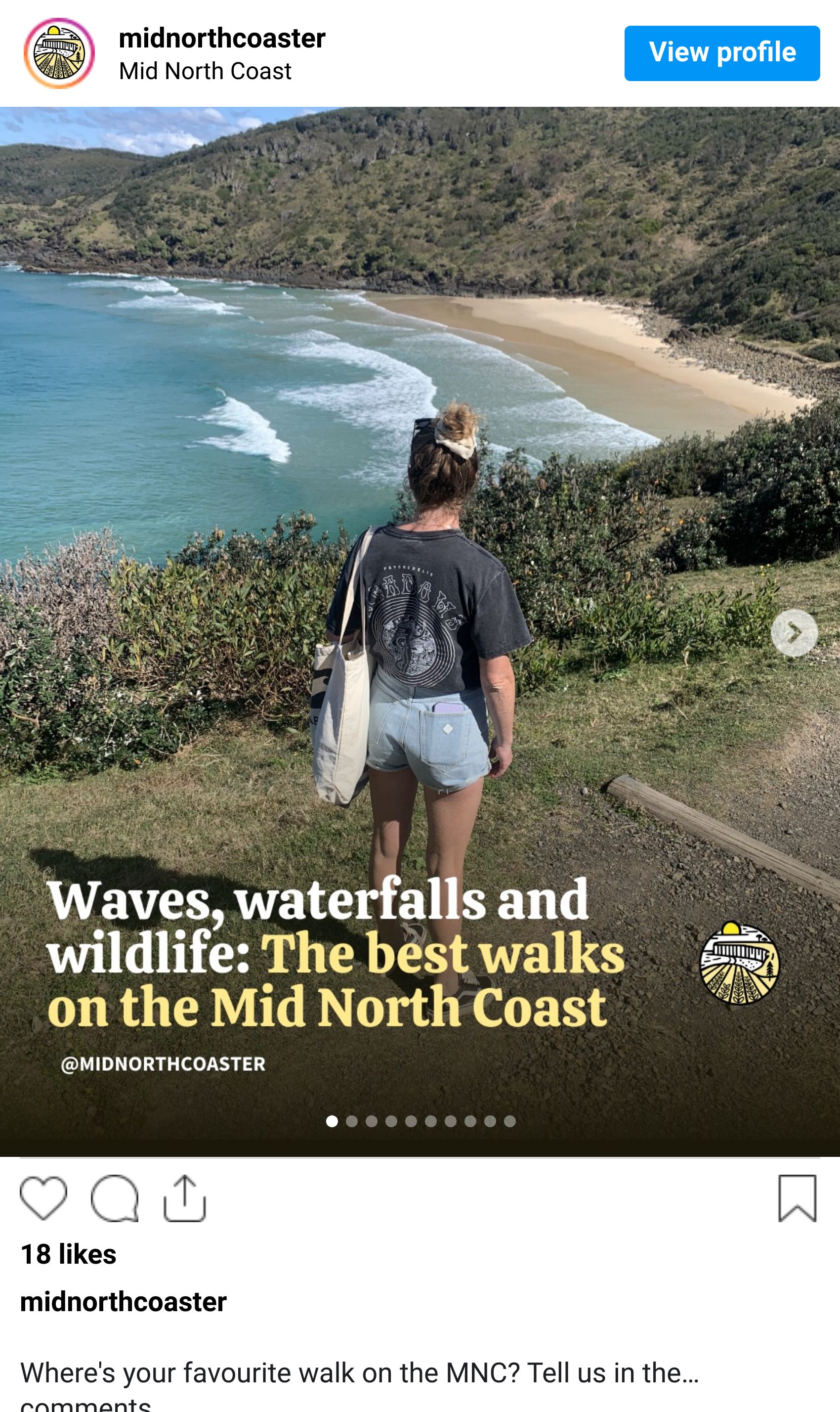
🥾 Waves, waterfalls and wildlife: The best walks on the Mid North Coast
Whether you’re looking for a walk along the coastline, an uphill challenge to a worthy view or an inland venture to a waterfall, the Mid North Coast has plenty on offer.
Our top picks cover the ancient rainforests of Dorrigo, Hat Head headlands with roos and epic views, North Brother mountain for the more adventurous, and more.
🟡 Scout Falls, Orara Valley
Located in Sherwood Nature Reserve in the Orara Valley is a stunning waterfall with a deep natural swimming hole by the name of Scout Falls.
While it is a short walk through bushland to reach the water, it’s a fairly rugged trail. Expect to traverse rocks and navigate creeks to get there.
The walking track and waterfalls are about a 40-minute drive from Coffs Harbour and the access road is unsealed.
🟡 Red Cedar Falls, Dorrigo
There are a number of hikes in Dorrigo National Park, from short walks to three-hour returns.
We love the Red Cedar Falls Track – about two hours (2.2km) return from Rosewood Creek Track.
It’s a steep descent down and back, but the falls at the bottom are worth the climb, and the towering trees and healthy forest is something spectacular.
🟡 Connors Walking Track, Hat Head
Starting at Gap Street, this is another coastal walk along headlands and beaches where resident roos take in the views.
A popular whale watching spot in the winter and bird-watching paradise in the warmer months – along with wildflowers lining the track.
One way, this walk is just under 4km, with options to stop and swim in the ocean.
🟡 The Coastal Walk, Port Macquarie
Did you know you can walk all the way from Town Beach foreshore in Port Macquarie to the lighthouse? It’s a 9km walk one way, winding along the coastline via Town Beach, Rocky Beach lookout, Nobby’s Beach and Harry’s lookout into the forest of Sea Acres National Park.
The walk ends at Tacking Point Lighthouse with several historical sites and seaside scenery along the way, as well as viewing platforms, picnic facilities and plenty of places to swim of course.
🟡 North Brother Mountain, Laurieton
For a more challenging walk, try the North Brother Mountain trek. Start in the town of Laurieton and climb the Dooragan Summit for the well-renowned views from the picnic area on North Brother Mountain.
The 3km track (one way) is easily accessible from town, taking you from the bustle to the bush – well, forest – in no time.
Hike through towering blackbutt and eucalyptus forest to get to the stunning coastal views.
🟡 Diamond Head loop walk, Crowdy Bay
This coastal loop walk in Crowdy Bay National Park shows off forest, beaches and the sparkling rock faces that give Diamond Head its name.
Start at Diamond Head campground to link up with the headland and forest walking track that will take you through paperbarks and swamp mahogany. You’ll come to Kylie’s lookout for beautiful ocean views.
Keep an eye on the rock cliff faces with quartz crystals that glint in the sunlight.
The headland offers panoramic views of Perpendicular Point and Crowdy Head, with the Three Brothers mountains in the background.
For the full list, check out the article on our website.


Thanks for reading, I hope you enjoyed this edition. I’ll be back next week with more newsletters.
In the meantime, make sure you’re following along on Instagram, TikTok, YouTube, Facebook and our website to keep up to date with local news throughout the week.
Have a great weekend everyone,
👋 Ellie